
Surface water and storm drainage
Storm drains, yard gullies, channel drains and the runs to soakaways cleared and repaired across Derby, Derbyshire and Nottinghamshire, 24/7.
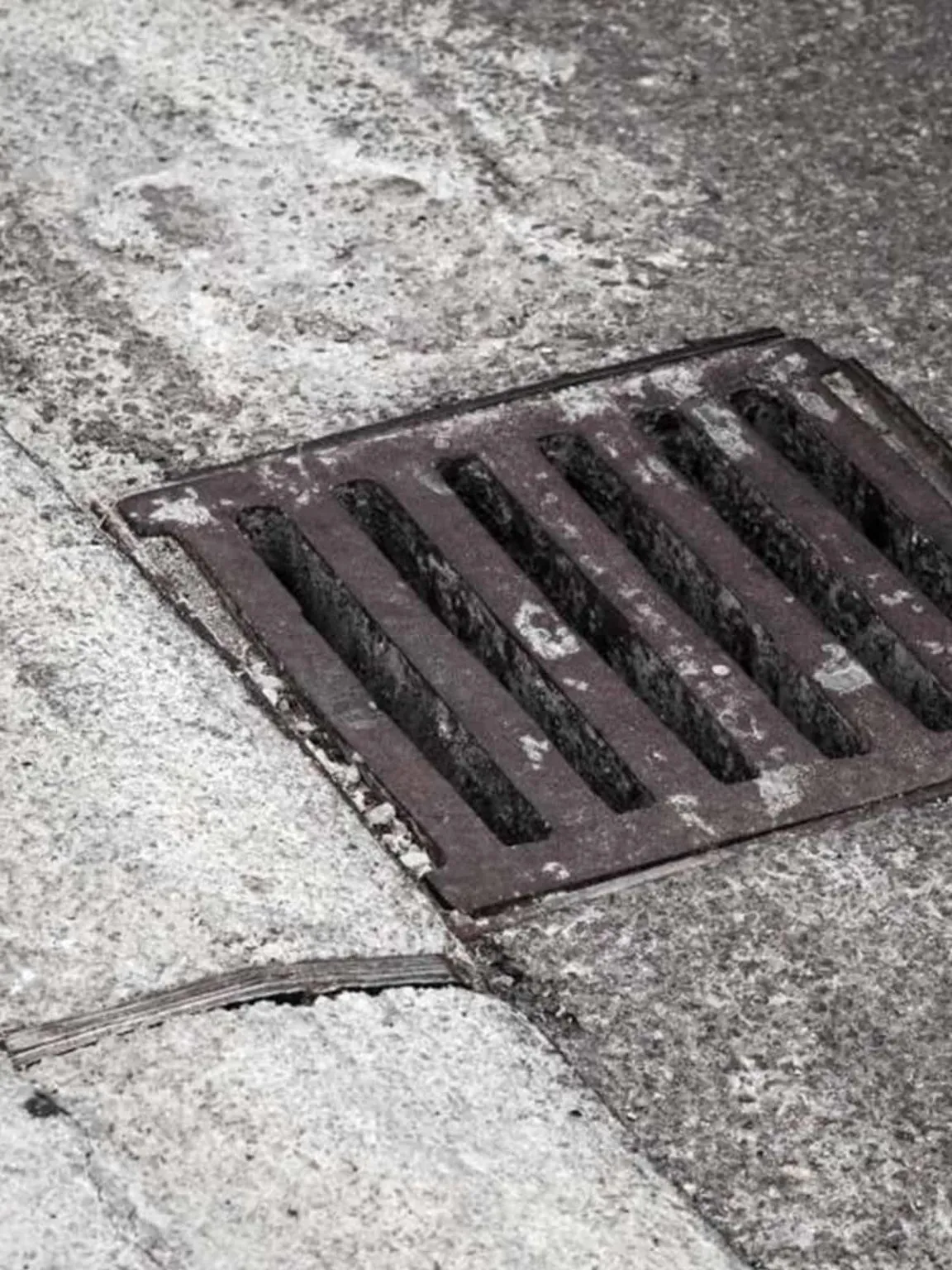
Surface water drainage is the system of gullies, channel drains and pipes. It carries rainwater off your roof, drive and yard, to a surface water sewer, a watercourse or a soakaway. Drainage Emergency clears and repairs blocked storm drains, yard gullies and channel drains across Derby, Derbyshire and Nottinghamshire, 24/7.
Your drive is a pond after every downpour, or water is heading for the door right now. You need to know whose problem it is, and who can fix it today. Drainage Emergency clears and repairs blocked storm drains, yard gullies and channel drains across Derby, Derbyshire and Nottinghamshire, 24/7.
Surface water drainage is the system of gullies, channel drains and pipes. It carries rainwater off your roof, drive and yard, to a surface water sewer, a watercourse or a soakaway. Below: why it happens here, what an engineer does, and who owns which pipe.
Where your surface water goes
Rain that lands on your property has three possible destinations. The foul drain that takes the toilet, sink and washing machine should not be one of them. Roof water comes down the downpipes into a gully or straight into an underground pipe. Drive and patio water goes through a grated channel or a yard gully. The pipe then runs to one of the three.
The city centre and the Cathedral Quarter run on combined drains. These take foul and surface water together. Later estates have two systems side by side. Outlying properties have no surface water sewer at all and rely on a soakaway.
Why drives, yards and gardens flood in Derby
Derby floods from the top down and from the bottom up.
From the top, the Derwent runs through the middle of the city. It drains a large Peak District catchment. A wet week in the hills arrives here as a river rise. Markeaton Brook runs from Markeaton Park in a culvert beneath the city centre.
It is historically the most destructive flood source in the city. In a downpour, it is still the pinch point where surface water backs up. When the sewers and culverts are full, nothing on your property can drain into them until they drop.
From the bottom up is the part you can fix. Around Oakwood (DE21), 1980s and 1990s estates were built with soakaways sized for a lawn and a path. Today’s paved drives send far more water at them. In Alvaston (DE24), the flat ground beside the Derwent gives the drains shallow falls.
Silt then settles in surface water pipes and gullies until a storm finds them half full. In Mickleover (DE3), long private runs and shared drives are common. One silted channel drain there can flood two garages.
Clearing blocked storm drains, gullies and channel drains
Rainwater carries grit.
Every gully and channel drain has a sump (a pocket below the outlet) to catch it. Once the sump is full, the grit goes on into the pipe. It settles at the first flat section. The engineer empties the gully sumps and channel runs by hand and by jetting.
Then the pipe is jetted from the downstream chamber back towards the house. That way the silt washes out rather than further in. Desilting is the same job on a bigger scale, for chambers and interceptors that have filled over years.
An outside gully overflowing in dry weather is usually the foul side; our blocked outside drain page covers it. Before the engineer leaves, a hose is run into the highest point of the system. The water is then followed to the outfall. Ring 01332 215521 if your gullies need clearing before the next forecast.
Repairing a damaged surface water drain without digging
Surface water pipes crack for the same reasons foul drains do. Ground movement, tree roots looking for water, a vehicle on a shallow run, or simply age, are the usual causes. A broken surface water drain often goes unnoticed for years because it only carries water in the rain. The first sign is a soft patch in the lawn or a drive slab that has dropped.
A closed-circuit television (CCTV) camera down the pipe shows the defect and where it sits. A single crack or open joint takes a patch repair, cured in place inside the pipe. A run with several defects is relined with a resin liner. It is cured inside the old pipe to form a new one.
Both are done from the chambers without digging up the drive. Excavation is the last resort, for a collapsed section that cannot be reformed. Our drain repair page explains the choice.
Soakaways: how they work and what we can do
A soakaway is a pit filled with rubble, or a set of plastic crates wrapped in filter fabric. It is buried a few metres from the house. The water soaks slowly into the surrounding ground. Around Elvaston Castle Country Park (DE72), in Elvaston, Thulston and Borrowash, soakaways replace the mains surface water sewer altogether. They are what the Oakwood estates were built with too.
They fail in two ways. The pipe to them silts up, which is a clearing job. Or the pit itself clogs with fine silt, and the surrounding clay stops taking water. That is not a clearing job.
We jet and camera the run to the soakaway. We clear the silt from the pipe and any chamber on the way. If the soakaway itself has stopped soaking, we will tell you plainly rather than keep jetting it.
Who is responsible: you, Severn Trent or Derby City Council
The pipes and gullies inside your boundary that serve only your property are yours. Beyond the boundary, and for any run shared with a neighbour, the pipe is Severn Trent’s. It owns the public sewers, and since the 2011 transfer of private sewers, most shared pipework too.
Road gullies are neither. Derby City Council is the Lead Local Flood Authority for surface water and ordinary watercourses. Highway gullies on adopted roads are theirs.
So a flooded drive with a clear road gully is a call to us. A flooded road with a clear drive is a call to the council. Water rising out of a manhole in the street is Severn Trent. If we open your chambers and find the problem is on somebody else’s pipe, we say so.
Keeping surface water out of the foul drain
A downpipe or yard gully connected to the foul drain is called a misconnection. It is common where extensions and patios have been added over decades. In the first heavy storm, the roof water overwhelms the foul run. The toilet and sink back up, and the gully outside the kitchen overflows with a mix of both. A blocked toilet or blocked sink that only happens in heavy rain is the classic sign.
Surface water should go to the surface water system or a soakaway. Foul water should go to the foul sewer. The two should never meet on your side of the boundary. A CCTV survey with a water test at each downpipe shows which pipe each one enters. Correcting one is usually a short dig at a single point.
Water rising now: what to do and what to have ready
If water is coming up a gully, or across the yard towards the house, lift the grate. Clear anything sitting on top of it, then ring 01332 215521. You will be asked whether the water is clean rain or foul, and whether the road outside is flooding as well. You will also be asked whether it has happened before. Customers regularly report us arriving within the hour, and one described a night callout in a rainstorm.
Quotes carry no hidden fees. Work quoted below two thousand pounds is paid on completion, and we hold £5 million public liability cover. A drain that is blocked in dry weather is an emergency drain unblocking job. Water that only appears with the rain is this one.
Ring 01332 215521 now and tell us whether the water is clean rain or foul. The engineer arrives with the jetting unit and a camera, and clears the gullies, channels and pipes that are yours. The engineer also tells you straight if the rest of the problem sits with Severn Trent or the council.
Recent surface water and storm drainage work in Derby
Around Derby: where this work comes from
We are based at Parker House on Mansfield Road (DE21), on the east side of the city. Every area below is one we attend regularly, and the notes are what our engineers actually find there.
Areas we cover for this service
- OakwoodDE21
1980s and 1990s estates with uPVC drainage. Fewer collapses, more blockages from wipes and fat, and surface-water problems where soakaways were undersized for today's paved drives.
Directions from our office - MickleoverDE3
Derby's largest suburb, mainly 1960s onwards with newer estates on the western edge. Long private drains to the adopted sewer and plenty of shared drives, which affects who is responsible for a blockage.
Directions from our office - Elvaston, Thulston and BorrowashDE72
The villages south-east of the city around Elvaston Castle, where mains drainage ends at the edge of Derby and septic tanks and soakaways take over. Older village properties with long private runs and, on the lower ground near the Derwent, soakaways that struggle in a wet winter.
Directions from our office
Local landmarks nearby
- Markeaton ParkDE22
Derby's most visited park. Markeaton Brook runs from here in a culvert beneath the city centre and is historically the city's most destructive flood source, which is why surface water still backs up in heavy rain.
Directions from our office - Elvaston Castle Country ParkDE72
Two hundred acres of parkland south-east of the city. The villages around it, Elvaston, Thulston and Borrowash, are where septic tanks and soakaways start to replace mains drainage.
Directions from our office
Whose drain is it? Severn Trent owns and maintains the public sewers in Derby. Since the 2011 transfer of private sewers, most pipework beyond your boundary became theirs. So did shared drains serving more than one property. The drain that serves only your property, inside the boundary, remains yours. If you are not sure, call us on 01332 215521 and we will tell you before anyone is sent out. Full coverage list on our service areas page.
Questions people in Derby ask about surface water and storm drainage
Does my property have surface water drainage?
Almost every property has some, because the downpipes and yard gullies have to go somewhere. The question is where. On a wet day, lift the inspection covers and watch which chamber the rainwater arrives in. If it joins the foul flow you have a combined system; if it runs in its own chamber it goes to a surface water sewer or a soakaway. A CCTV survey settles it where the covers do not.
How do I know if my surface water goes to a soakaway?
If there is no surface water sewer in your road, or the rainwater pipe leaves the house towards the garden rather than the street, it almost certainly ends in a soakaway. A camera down the pipe follows it to the end. The Oakwood estates and the villages around Elvaston are where we most often find them.
What is the law on surface water drainage?
The principle that matters at home is separation. Rainwater must not be connected into the foul drain, and foul water must never go into a surface water drain or watercourse. Inside your boundary the pipes are yours to maintain; beyond it, and on shared runs, they are Severn Trent's. Derby City Council, as Lead Local Flood Authority, looks after highway gullies and ordinary watercourses.
Why does my drive flood in heavy rain?
Either the channel drain and gully sumps are full of grit and the water cannot get in, the pipe beyond them has silted at a flat section, or the sewer or soakaway they discharge to is already full. The first two we clear on the day. The third is a capacity problem we can diagnose but not jet away.
Who do I call if the road outside is flooding?
Derby City Council for highway gullies on an adopted road, and Severn Trent if water is coming up out of a manhole in the street. If the road is clear and only your drive, yard or garden is under water, the problem is on your side of the boundary, and that is our job.
Can you fix a soakaway that has stopped working?
We jet and camera the run to it and clear the silt from the pipe and any chamber on the way. If the soakaway pit itself has clogged and the ground no longer takes water, we tell you plainly rather than keep jetting it, so you can plan a replacement.
What Derby customers say
★★★★★“Chris was extremely quick and courteous. He immediately came out to my home at night during a terrible rainstorm. I would highly recommend him and will def contact him again if another problem arises.”
Itay Desau
★★★★★Chris was really courteous and came out the same day we called, as we were on our way. We had a clogged drain in the front driveway, so he cleaned it all out, washed down the road, and took photographs for us. The cost was reasonable, and he was
Simon Mottram
★★★★★When the heavy rains came last Saturday, our driveway’s drain blocked and water began to rise internally. We phoned Chris, and he arrived in about two hours. He was terrific; he was attentive, polite, and did an excellent job.
John Ryan