
High pressure drain jetting
High pressure water jetting, drain cleaning, desilting, gully cleaning and descaling across Derby, Derbyshire and Nottinghamshire, any hour of the year.
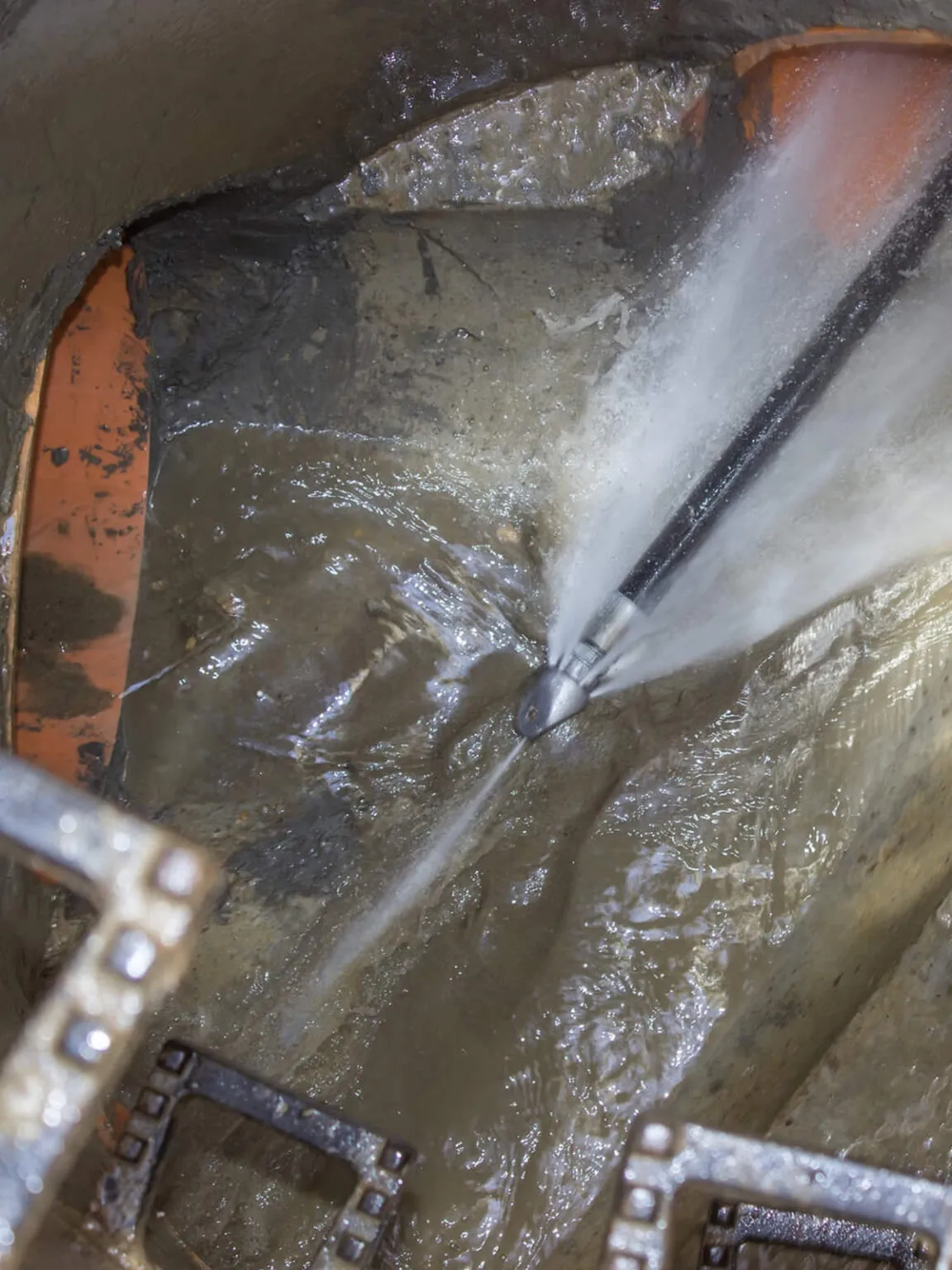
High pressure drain jetting in Derby clears the grease, silt, scale and root ingress that rodding cannot shift. A hose fed down the drain from the nearest chamber or gully cuts the build-up off the pipe wall. It flushes the debris to the sewer and leaves the pipe at its full bore.
Your drain is slow, or it has blocked again a month after someone rodded it. That is what jetting is for. High pressure drain jetting in Derby clears the grease, silt, scale and root ingress that rodding cannot shift.
A hose fed down the drain from the nearest chamber or gully cuts the build-up off the pipe wall. It flushes the debris to the sewer and leaves the pipe at its full bore. Drainage Emergency, based on Mansfield Road, DE21, jets domestic and commercial drains 24/7 across Derby, Derbyshire and Nottinghamshire.
This page explains what jetting does and when rods are enough. It also covers the four jobs that sit under it: drain cleaning, desilting, gully cleaning and descaling. If your drain is blocked now, call 01332 215521.
What high pressure drain jetting does
Jetting removes what caused the blockage rather than pushing a hole through it. The hose goes into the drain from the nearest inspection chamber, or from a gully. An inspection chamber is the brick or plastic pit under a manhole cover. The nozzle on the end fires water backwards as well as forwards.
That pulls it along the pipe and cuts the build-up off the wall as it goes. The debris is flushed back to the chamber or on to the sewer. The engineer keeps working the hose until the pipe runs clear along its whole length. That means its full bore, the whole width of the pipe.
Rods push. Jetting removes.
That is the difference that matters when the same drain has blocked twice in a year. A rod can open a path through a fat plug. It leaves most of it on the pipe wall, where it starts collecting again the same week.
Different nozzles do different jobs. A flushing nozzle works on soft material and a root-cutting head clears fibrous roots. A descaling head takes hard scale off the inside of the pipe. The engineer picks the head after looking at the drain, not before.
Jetting or rodding: which one your drain needs
Rodding is quicker. For a soft blockage within reach of an access chamber, rodding is enough. That is why our engineers carry rods and try them first where they will work. Jetting is the answer in three cases.
Rods have gone through the blockage and it has come back. Or the drain is slow rather than fully blocked. It is also the answer when the material is grease, silt, scale or roots.
On an emergency callout the engineer decides on the spot. A toilet backing up in a Chaddesden semi is often wipes wedged at the rear gully. Rods clear it. Kitchen waste from a city centre pub can lay down years of fat along a shared Victorian run. Rods will make a hole, and jetting will clean it.
Our emergency drain unblocking page covers the callout itself. Jetting is part of that callout when the drain needs it, not an extra sold afterwards. You do not need to know which one you need before you ring 01332 215521.
Drain cleaning
Drain cleaning is jetting done before the drain blocks rather than after. A planned clean removes the grease, silt and debris that build up in a run over months. That way the pipe never reaches the point where a toilet overflows on a Saturday night.
Homes with a history of repeat blockages see fewer emergencies once the drain is cleaned on a schedule. The same is true for landlords with a block of flats on one shared drain, and for commercial kitchens. A scheduled clean beats clearing the drain in a panic.
For a home it is usually a single visit. The engineer jets the main run from the front chamber, then the kitchen and toilet branches. Last, they check the gullies and confirm the flow.
For a business it becomes a schedule. Our commercial drain cleaning and maintenance contracts page covers that. It matters most for pubs, restaurants, shops, offices and estates, where a blocked drain means closing the door.
Cleaning also tells you about the pipe. A drain that runs clear after jetting but slows again within weeks usually has something else wrong with it. That is when we recommend a camera rather than another clean.
Drain desilting
Desilting removes silt, sand and settled debris from drains, interceptors, wet wells and inspection chambers. An interceptor is the chamber on a yard or forecourt. It traps silt and oil before it reaches the sewer. A wet well is the sump a pump draws from.
It is a heavier job than clearing a blockage. The material has settled along the bottom of the pipe over years, reducing the bore. Eventually the drain carries only a fraction of the flow it was designed for.
Silt settles wherever water slows down. In Derby that means the flat ground close to the Derwent. The inter-war and post-war housing around Alvaston Park, DE24, sits on drains with shallow falls.
Silt and fat drop out of the flow there instead of being carried to the sewer. A desilting visit works a flushing nozzle along the run from the downstream end. That brings the pipe back to its full bore.
Surface water drains collect more silt than foul drains because they take grit off roofs and drives. We desilt chambers and interceptors as part of a clean. The material comes out of the system rather than being pushed further down it.
Gully cleaning
Most flooded yards start at the gully. A gully is the trapped grating in a yard, drive or garden. Rainwater and waste from a sink or downpipe enter the drain there.
It holds a water seal, like a toilet does, to stop sewer smells coming up. That seal is where leaves, silt, fat and grit collect. A blocked gully floods the yard first and then backs up the drain behind it.
Cleaning one means lifting the grate and clearing the trap. Then the pipe is jetted from the gully to the next chamber. The 1930s to 1960s semis in Chaddesden, DE21, have long back gardens.
The rear gully sits at the end of that run. A gully that keeps blocking there usually means silt further along. The run gets jetted on the same visit.
Highway gullies on adopted roads belong to Derby City Council. The gully in your yard or drive is yours.
Drain descaling
Older pipes grow a crust. Scale is the hard mineral deposit that builds up inside a cast iron soil stack or a clay drain. A soil stack is the vertical pipe that carries toilet waste down the outside of a building.
Scale like this is common in the clay drains under Georgian and Victorian buildings. It narrows the pipe a little at a time and gives grease and paper something to catch on. A descaled drain blocks far less often than one that is only ever cleared.
Descaling runs a descaling head along the pipe to knock the deposit off the wall, then flushes it out. It is slower than a standard clean, and the engineer checks the pipe on camera first. A drain that has lost its wall to corrosion is a repair job rather than a cleaning job.
The Cathedral Quarter, DE1, is where descaling earns its keep. Shops, pubs and the flats above them share combined Victorian drains that carry grease-heavy waste. Scale in those runs is often the reason a business has been rodding the same drain every few months. Descaling, then a planned clean, breaks that cycle.
What happens when you call, and what affects the cost
Call 01332 215521 and you speak to us, day or night, 365 days a year. Tell us where the drain is, what it is doing and whether you know of an access chamber. A fully qualified drainage engineer attends with the jetting unit, rods and a camera. A blocked drain is cleared on the same visit, and a planned clean is done in one go.
Customers regularly report us arriving within the hour. One described the engineer going down into the manhole himself. He cleared out the debris rather than working it from the top.
The cost depends on the length of the run and how easy the access is. It also depends on what is in the pipe. We quote before work starts, and there are no hidden fees. For quotes below two thousand pounds, you only pay on completion. We carry £5 million public liability insurance.
After jetting, where the cause is not obvious, the camera goes down. A closed-circuit television (CCTV) drain survey shows whether the blockage was a one-off. It also shows whether a displaced joint, root mass or collapse is going to bring it back. If it is, our drain repair team can line or patch the pipe without digging.
Where jetting is the routine fix around Derby
The calls for jetting follow the ground and the housing. Alvaston, on the flat land beside the Derwent, generates desilting work because its drains have so little fall. In Littleover, DE23, and Allestree, DE22, mature gardens mean tree roots in clay drains. A root-cutting head on the jetting hose is the first fix, before anyone talks about relining.
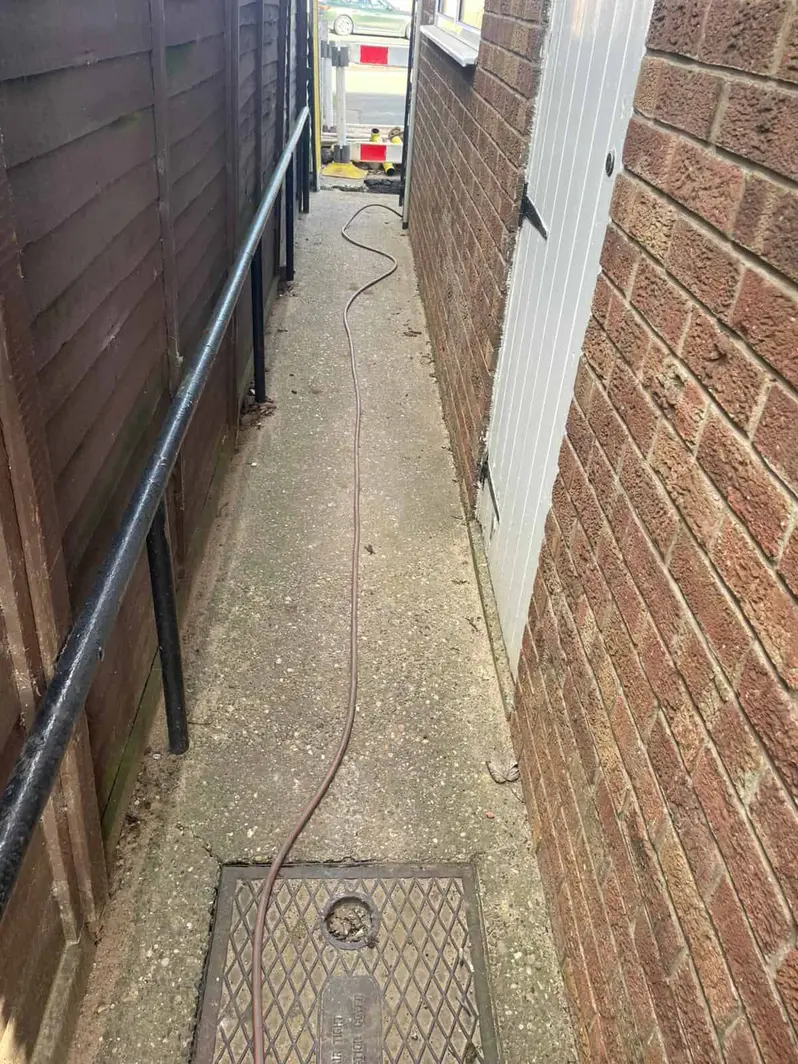
Chaddesden is a few minutes from our office on Mansfield Road. A slow drain there is usually silt along a long rear run rather than a single blockage. The job photo on this page shows a cable run down a side passage to a drain cover there.
Beyond the city we cover the Erewash towns, Ilkeston and Long Eaton, in under half an hour. Their Victorian terraces and inter-war semis are much like the east of Derby. We also cover Belper and Duffield up the Derwent valley, with their stone-built terraces and older village properties. Severn Trent owns the public sewer beyond your boundary, and any drain shared between properties. The drain that serves only your property is yours, and that is the pipe we jet.
Call 01332 215521 and tell us what the drain is doing. We will say whether it sounds like a job for rods or for the jetting hose. The engineer who comes out brings both.
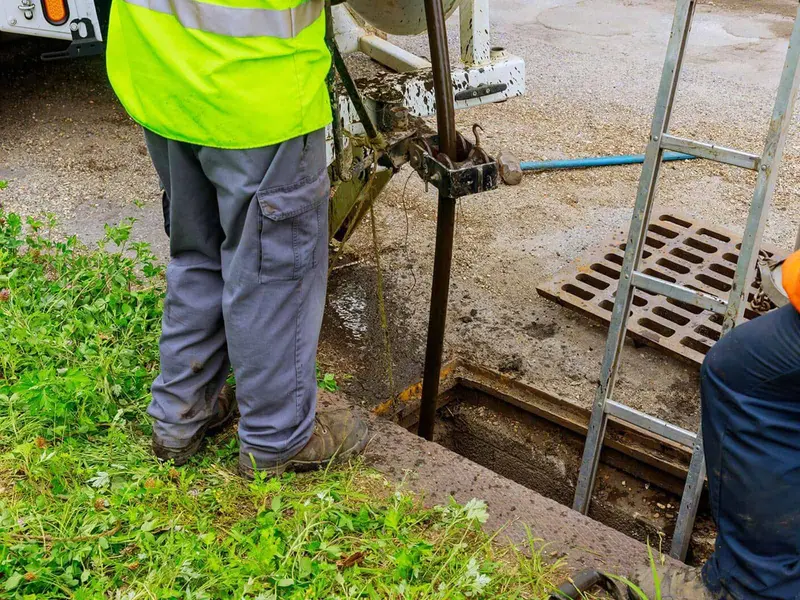
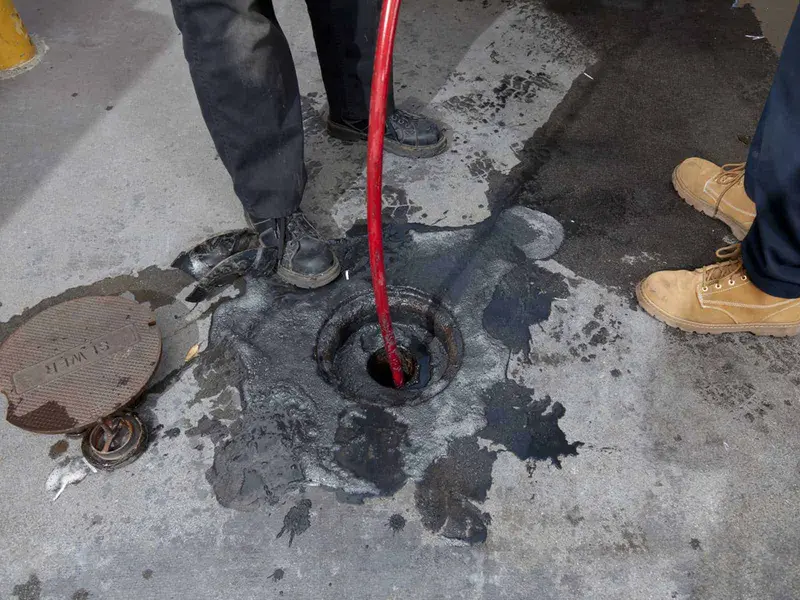
Recent high pressure drain jetting work in Derby
Around Derby: where this work comes from
We are based at Parker House on Mansfield Road (DE21), on the east side of the city. Every area below is one we attend regularly, and the notes are what our engineers actually find there.
Areas we cover for this service
- LittleoverDE23
Edwardian and inter-war semis nearer the city, larger post-war plots towards Burton Road. Mature gardens mean tree roots in clay drains are the usual cause of repeat blockages.
Directions from our office - ChaddesdenDE21
Mostly 1930s to 1960s semis on the east side of the city, a few minutes from our Mansfield Road office. Original clay drains and long back-garden runs to a rear gully are typical.
Directions from our office - AllestreeDE22
Leafy 1930s to 1960s suburb on the north side with large gardens and mature trees, so root ingress into clay drains is the most common survey finding.
Directions from our office - AlvastonDE24
Inter-war and post-war housing around Alvaston Park, on flat ground close to the Derwent. Shallow falls on the drains mean silt and fat build up faster than on sloping sites.
Directions from our office
Local landmarks nearby
- Derby Silk Mill (Museum of Making)DE1
The 1721 silk mill on the Derwent is counted among the first factories anywhere. The Cathedral Quarter around it runs on combined Victorian drains shared between shops, pubs and the flats above them.
Directions from our office - Pride Park StadiumDE24
Home of Derby County since 1997, at the centre of the business park built on old railway land. Modern, large-bore drainage that is maintained on a schedule rather than fixed in a panic.
Directions from our office - Alvaston ParkDE24
A riverside park on the flat ground beside the Derwent. Drains around here have shallow falls, so silt and fat settle out and jetting is the routine fix.
Directions from our office
Whose drain is it? Severn Trent owns and maintains the public sewers in Derby. Since the 2011 transfer of private sewers, most pipework beyond your boundary became theirs. So did shared drains serving more than one property. The drain that serves only your property, inside the boundary, remains yours. If you are not sure, call us on 01332 215521 and we will tell you before anyone is sent out. Full coverage list on our service areas page.
Questions people in Derby ask about drain jetting
How much does drain jetting cost in Derby?
It depends on the length of the run, how easy the access is and what is in the pipe, so we quote after hearing the details rather than publishing a flat rate. There are no hidden fees on the quote, and for quotes below two thousand pounds you pay only when the work is complete.
Do councils unblock drains?
Derby City Council looks after the highway gullies on adopted roads and is the Lead Local Flood Authority for surface water. Severn Trent Water owns the public sewers and, since 2011, most pipework beyond your boundary and any drain shared between properties. The drain that serves only your property is yours to clear, which is what we are for. If we find the blockage is in a public sewer we will tell you, and you report it to Severn Trent.
Does washing-up liquid unblock drains?
It can loosen a light film of grease in a sink trap with hot water behind it, but it does nothing to a fat plug or a bed of silt in the drain run outside. If the sink slows again within days, the build-up is further along the pipe and needs jetting.
What is the strongest drain unblocker?
Chemical unblockers are caustic or acid based. They burn a path through soft material, attack older pipework and leave the drain dangerous for the engineer who comes out afterwards. Jetting is mechanical, water cutting the build-up off the pipe wall, and it clears things no chemical will touch without harming a sound pipe.
Can jetting damage old clay drains?
A sound clay drain, even a Victorian one, takes jetting without harm, because the water works on the deposit rather than the pipe. A drain that is already cracked or has a displaced joint can be made worse, which is why the engineer watches what comes back and puts a camera down if there is any doubt, and why descaling an old run starts with a survey.
How often should a drain be jetted?
There is no fixed interval. A home with a long clay run and mature trees may need a clean every year or two; a commercial kitchen on a shared Victorian drain may need it several times a year. The first clean and a camera run show how quickly the drain fills, and the interval is set from that.
What Derby customers say
★★★★★We have used him a few times and would highly recommend him to all of our friends. He was on time, professional, and utilised a jet draining cleaning equipment. I would most certainly contact Chris again.
Joel Phillips
★★★★★The easiest 5 star review I’ve ever written. The initial representative, who kept me informed via online chat that was a genuine human being, quick and efficient – the drain was clogged in a matter of minutes, even helped to clean up the mess. All for a price significantly
Sandra Okwukaogu
★★★★★I’d give Chris six stars if I could. Today, he unblocked my drains and did an excellent job. He physically went down into the manhole and cleaned out all the filth and debris from God only knows how long ago..
Clive Goodman